Royal Dahabiyas on the Nile
Zarafa (Giraffe) Deluxe Dahabiya Nile Cruise
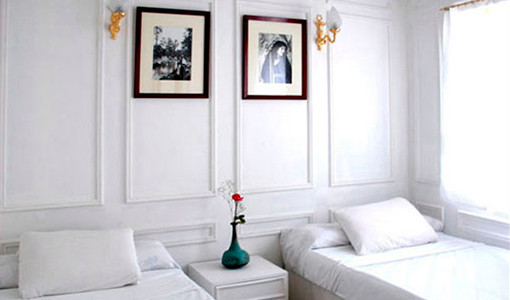
Eight cabins & one suite
Previously owned by His Majesty Sultan H. Kamel
The First Sultan of Egypt after Egypt’s independence
from the Ottoman Empire after WWI
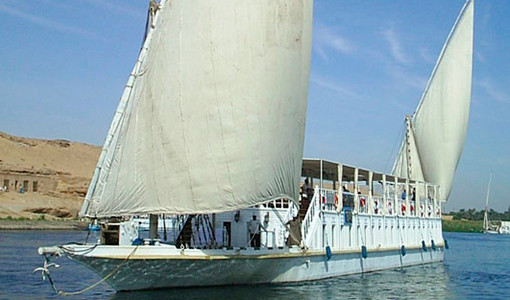
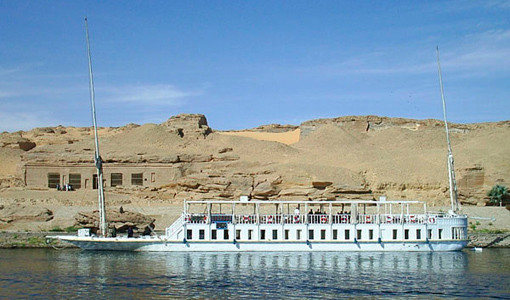
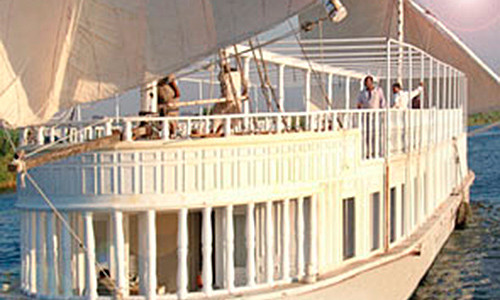
The dahabeya was built in approximately 1835, used by Egypt former royal families and later on celebrities of the 1950’s era for pleasure trips. Because they were painted in gold the Dongola and similar boats were called ‘dahabeya’ which means ‘Golden Boat’. The Zarafa is air-conditioned.
Start Weekly on Saturday:
The program starts every Saturday in either Luxor or Aswan, and the journey lasts seven nights.
The trip includes visits to sites in ancient Thebes (the Valley’s of the Kings and Queens), the Luxor and Karnak temples, as well as Edfu, Kom Ombo and Philae. Entrance fees for the monuments are all inclusive.
In addition to these historical sites, guests will visit less frequented monuments and enjoy field excursions to villages and open countryside. In short, we promise our guests a unique, tranquil journey on sailboats fit for a king or a Pharaoh!
This Royal Dahabiya is available for charter and your exclusive and private use of the Dahabiya. Each cabin may be occupied by one or two guests. There are no triple occupancy cabins. You may book one or more cabins, or charter the full boat/dahabiya. Cancellation policy: All deposits and further payments non-refundable.
| Rates are always in USD $ | |
| Per person in double: | $ 3300. 000 |
| Per person in single: | $ 5700. 000 |
Rate Includes:
- All transfers in Luxor and Aswan, always on a private basis.
- Private air conditioned coaches for all transfers and tours.
- Guided sightseeing including all entrance fees, all as per itinerary.
- Pre set meals as listed including B = Breakfast, (or cB, Continental Breakfast), L = Lunch, D = Dinner
- Tea/ coffee and afternoon tea while on board the Deluxe Nile Cruise.
- Bottled water with meals
- With the charter rate, you get your own private resident Egyptologist for your group
- Complimentary Gallabiya for each guest
The dahabeya was built in the late 1800 ‘s, fully restored with today’s comfort, used by Egypt former royal families and later on celebrities of the 1950’s era for pleasure trips. Because of its being painted in gold the Dongola and similar boats were called ‘dahabeya’ which means ‘Golden Boat’. The Zarafa is air conditioned.
Sailing on a dahabeya means exploring the Nile in a traditional style being able to enjoy visits of some unique places and monuments unattainable by modern cruise ships. Other memorable experiences are the BBQ on isolated islands or joining the ‘chef’ for green-grocery shopping in rural markets and villages.
The Dahabbiyas are beautifully crafted wooden ships, outfitted in colonial style with oriental and Egyptian touches. The interiors boast period furnishing, and each cabin has its own distinct style and interior.
Facilities
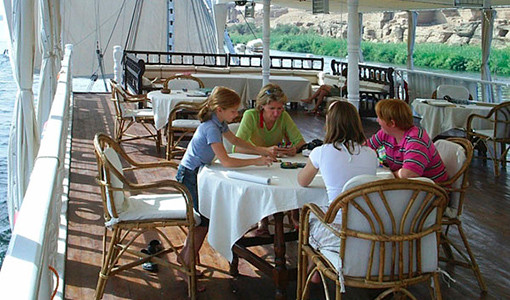
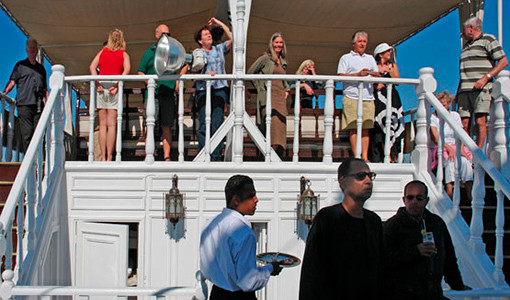
The boat features a combination of nostalgic atmosphere and modern comfort, a pleasant place to relax and to enjoy the peace and silence. The salon is the perfect meeting place and sometimes, in cold winter days, dinner is served here. For relaxing and enjoying the passing landscape the sun deck is the place, where breakfast, lunch and dinner are served. The Zarafa is air-conditioned
What to Pack on the Nile:
Most of the year look forward to warm, even hot weather in Luxor & Aswan, morning & evenings are cooler. For Shore excursions, we suggest comfortable cotton & natural fabric lightweight clothing. Comfortable walking shoes are essential. Lightweight comfortable & casual clothing. Swimsuits, sun hat.
Our Nile cruise passengers come from all countries of the world, more from Europe, but also from North America, South America and Asia, and naturally they’ll often keep the company of their own language and culture.
Your patience and extra efforts to interact are sure to bear rewards.
Some guests from the USA did bring up the issue that in some cases the boat did have 2 or 3 English speaking couples onboard, and that they expected more! Most sailings have a few native English speakers, though the numbers, of course, vary by season, and are not guaranteed.
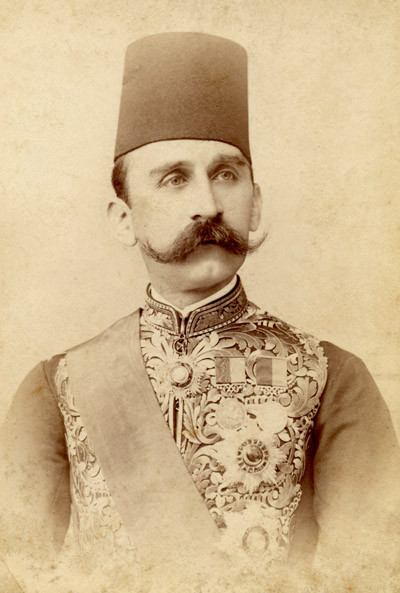
Sultan Hussein Kamil
By Ch. Chusseau-Flaviens [Public domain],
via Wikimedia Commons
(November 21, 1853 – October 9, 1917)
The Sultan of Egypt and King of The Sudan
from December 19, 1914 – October 9, 1917
during the British occupation which lasted from 1882-1922
Sultan Hussein Kamil was the son of Khedive Isma’il Pasha, who was ruler of Egypt from 1863 until 1879.Kamil was appointed Sultan of Egypt after the deposition of his nephew, Khedive Abbas by the British. Egypt was declared a British protectorate in 1914 at the beginning of World War I. These moves brought to an end the nominal control of Egypt by the Ottomans.
Peter Hughes’Going with the flow’…’The riad I found was not in the city but on the Nile. It’s a dahabiya, a traditional, two-masted Nile sailing cruiser. Anywhere else it would be called a yacht. King Farouk had several. So if a riad is a small princely palace on land – now given over to holiday making – a dahabiya is a riad on the river…’…’Mahogany panelled and with two faux-glass oil lamps swinging from the beams – a perfect touch for a sailing ship – the look was of a colonial club. Hercule Poirot could have popped up at any moment. There were button-back leather sofa and chairs, an antique bookcase and Scrabble, and tables where we ate when the weather was too chilly for the deck. The food was outstandingly good…’…’ While the big ships charged by as if permanently late, the El Bey moved at the same courtly pace as the Nile – slow enough to enable us to smell woodsmoke from the villages and watch the kingfishers hover. Under our isosceles sails we were as much a curiosity as the boys laying fishing nets and the women doing laundry, the donkey carts and buffalo. But it was the sight of some 40 huge cruise boats, moored in ranks, cheek by gunwale up to 10 deep, at the pretty little temple of Kom Ombo that made the greatest sense of dahabiya travel. The dahabiyas don’t take you to sites different from the norm, but they do take you in irresistibly different style…’…’The greatest compliment to the El Bey was that, for all the wonders of ancient Egypt, show
Royal feluccas and Dahabbiyas bore a larger-than-life image of the pharaoh, seated on a throne, to be seen and venerated by inhabitants even along the most remote canal. In turn, imbued with the same “ka,” or spirit, as the living pharaoh himself, it would keep watch over his subjects and their activities.
So integral was the Nile Dahabbiya and felucca to the ancient Egyptian way of life that it assumed legendary attributes. Even today, you can see the oldest known Nile felucca, the regal pharaonic Dahabia of Cheops, the ruler immortalized by the Great Pyramid at Giza. Known as the Solar Boat, it was believed to sail through the skies carrying its royal passenger along sunbeams in his single cabin, the royal suite of its day.
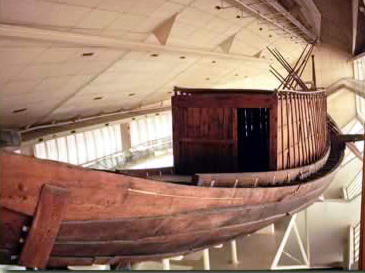
The regal pharaonic Dahabia of Cheops Museum in Giza is a must see.
In later times, pashas, emirs, and sultans found that feluccas were indispensable. When Napoleon invaded Egypt, the Mamluks rulers observed the Battle of the Pyramids from their dahabeahs, and in the wake of defeat, set them afire, still laden with treasures, in the middle of the river. Always one to adapt to local practice, Napoleon even had his own dahabeah, the Italy, which was used by his officers to explore Upper Egypt.
In the nineteenth century, the well-equipped Nile Dahabbiya and felucca was essential to the upper-crust adventurer. Lord Kitcheners used several feluccas for his famous trip from Cairo to Khartoum.
It took from two to three months to ascend the Nile under wind power, and another month-and-a-half to float back downstream, stopping at the great temples along the way. King Farouk, Churchill, Montgomery, Mark Twain and others settled in for the journey, and a certain Lady Edwards even had a piano installed on her sailing vessel.
Eventually, steamers displaced dahabeahs, opening up an Egyptian adventure to greater numbers on Thomas Cook’s tours, and trains nearly finished them off. But never completely. Even today, despite the inroads of rail, steam power, and highways, the graceful Nile felucca retains its place.
A skilled river captain is on board at all times. A guide is at your disposal to plan your itinerary and escort you through the sites you choose to visit. The crew has completely separate quarters, to ensure your privacy.
 Loading